Lead Pipes and Solder in Older Homes
Lead pipes are more likely in homes built before 1986, EPA says; in a remodel, check the service line and old solder joints with a coin scratch and a magnet, then test the water through a certified lab.
Set by the Trench to Trim desk from code, agency and maker documents · how pages are made · Updated
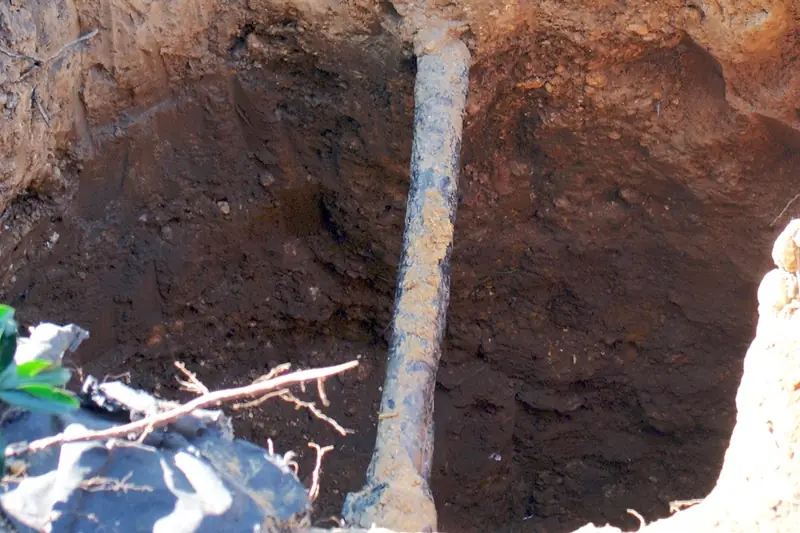
Proof marks
- Lead pipe turns up most often in older cities and in houses built before 1986, according to EPA (EPA).
- Since June 1986, federal law has barred pipe, fittings, fixtures, solder and flux that are not "lead free" in drinking-water plumbing.
- Since January 4, 2014, "lead free" has meant a weighted average of 0.25% lead on wetted surfaces, and 0.2% for solder and flux (EPA).
- EPA's quick check: lead is dull gray and soft, scratches to silver with a coin, and a magnet will not cling to it.
- EPA's 2024 rule requires water systems to replace lead service lines within 10 years; the rule's compliance date is November 1, 2027.
- Paid work that disturbs more than 6 square feet of paint per room inside a pre-1978 home falls under EPA's RRP rule, and demolition of painted surfaces is always covered.
How do you know if a house has lead pipes?
You find out by looking at the pipe where the water line enters the house, usually near the main shutoff, and by testing the water. EPA's Know Your Plumbing sheet describes the checks, which need only a coin or key and a magnet.
- Lead: dull gray and soft; a coin or butter knife scratches it to a silver color, and a magnet will not cling to it.
- Galvanized steel: a magnet clings easily, it does not scratch easily, and it often has threaded ends.
- Copper: a scratch shows a shiny copper color and a magnet will not cling, but EPA notes older copper piping can have lead solder.
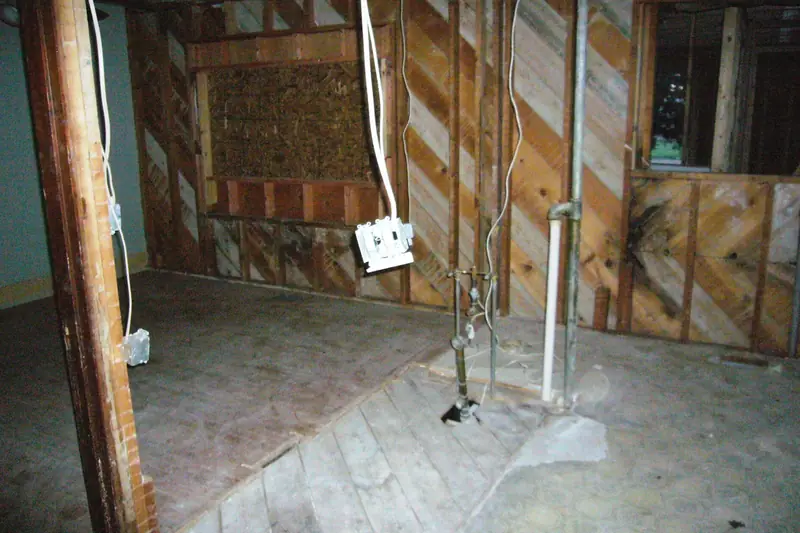
EPA's Protect Your Tap check walks through the same steps. In homes without a lead service line, EPA says the most common problem is brass or chrome-plated brass faucets and plumbing with lead solder. A remodel is a good moment to look, because walls and floors are already open; photograph any pipe you find before it is covered or removed.
When was lead banned in plumbing?
Lead was barred from new drinking-water plumbing after June 1986, when amendments to the Safe Drinking Water Act required pipe, fittings, fixtures, solder and flux to be "lead free". At that time, EPA says, lead free meant no more than 0.2% lead in solder and flux and no more than 8% in pipe.
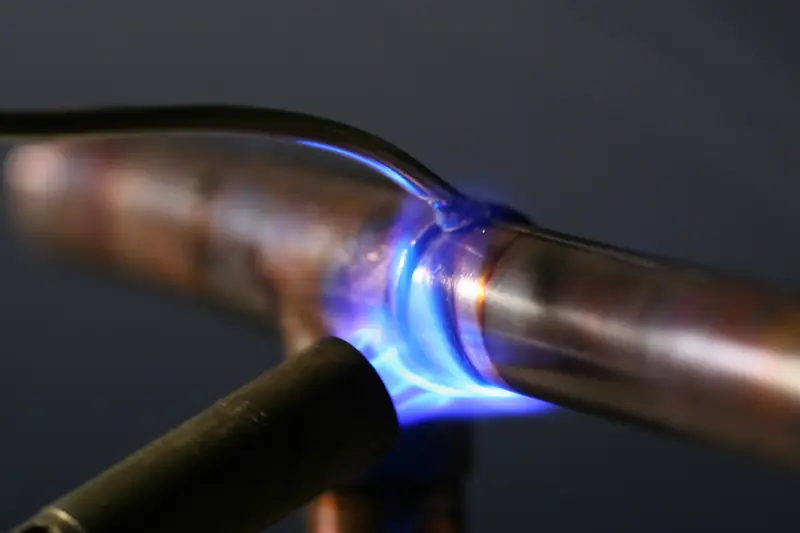
The Copper Development Association's Copper Tube Handbook puts it the same way: solders with more than 0.2% lead are banned for potable water by the 1986 amendment. It adds that some state and local jurisdictions may still allow 50-50 tin-lead solder on some drainage and HVAC piping, which carries no drinking water.
So a house plumbed before mid-1986 may have lead solder on copper joints, and older houses may also have a lead service line. A house built later can still have older pipe if parts of it were kept from an earlier build.
What does lead-free mean today?
Today "lead free" means a weighted average of no more than 0.25% lead across the wetted surfaces of pipes, fittings and fixtures, and no more than 0.2% lead in solder and flux. Congress set that in the 2011 Reduction of Lead in Drinking Water Act, which took effect on January 4, 2014.
Since September 1, 2023, makers and importers of regulated plumbing products have needed "lead free" certification, EPA says. Some products are exempt from the definition, including toilets, bidets, fill valves, tub fillers and shower valves, because they are not used for drinking water.
For a remodel, that means new supply pipe and faucets from current makers should carry lead-free marks. Ask the plumber which marks the pipe and fittings carry; potable PEX and fittings are tested under NSF/ANSI standards, and the PEX vs copper page explains the markings.
What should happen before a remodel disturbs old pipe?
Before old pipe is cut, the plumber should identify what it is, and the crew should plan for lead-safe work if the house was built before 1978 and painted walls are being opened. Those are two separate rules: lead in water pipes and lead in paint.
EPA's Renovation, Repair and Painting rule requires anyone paid to disturb painted surfaces in a pre-1978 home to be certified and use lead-safe practices. Minor jobs of 6 square feet or less of paint per room inside are exempt, but EPA says demolition of painted surfaces is always covered. Opening a wall to reach plumbing is demolition of a painted surface, so a paid crew doing it in a pre-1978 home would fall under the rule; that is a reading of EPA's wording, so ask the contractor to show certification. The rule generally does not apply to owners working on their own home unless it is rented, holds a home daycare, or is being renovated for sale.
Licensed plumber, certified crew, and water system calls
- Cutting, removing or replacing old supply pipe or service line is work for a licensed plumber, under a permit where your city requires it.
- Paid work that disturbs paint in a pre-1978 home needs an RRP-certified firm.
- The public side of a service line is typically the water system's; replacement there is coordinated with them.
- Health questions about lead exposure go to your doctor or local health department; this site follows EPA's wording only.
- Your building department and a licensed plumber have the final word.
Who replaces a lead service line?
The water system replaces the part it owns, and the property owner is usually responsible for the private side, though programs differ by city. In a 2019 report, EPA wrote that in most communities lead service lines are partly owned by the water system and partly by the customer, with the system typically owning the stretch from the main to the curb stop or meter.
EPA's 2024 Lead and Copper Rule Improvements require water systems to replace lead service lines within 10 years; the rule's compliance date is November 1, 2027. Don't plan around a fixed year for your own street: ask your water system whether your line is listed as lead or galvanized and how its replacement program handles the private side.
If you are opening the yard or basement anyway, ask whether the private-side line can be replaced at the same time, under a permit, by a licensed plumber working with the water system. Replacing only part of a line is a question to raise with the water system first.
Should you test the water?
Yes, if you suspect lead anywhere in the system. EPA says testing is the only way to confirm lead is present, and recommends sending samples to a certified laboratory.
Start with your water system, which can tell you what is known about your service line and how to sample. Testing again after pipe is replaced shows whether the change made a difference. Keep the results with the permit file. If someone in the house is at higher risk, ask your doctor or local health department what to do next.
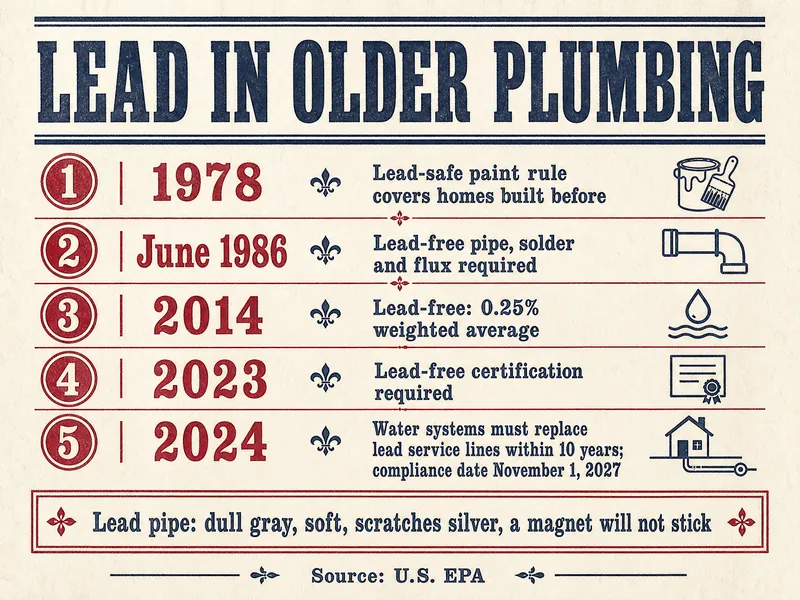
Lead in plumbing, by the numbers
- 1986Year federal law barred non-lead-free pipe, solder and flux in drinking-water plumbingEPA
- 0.25%Weighted average lead limit on wetted surfaces since January 4, 2014EPA
- 0.2%Lead limit for solder and fluxEPA
- 10 yearsTime EPA's 2024 rule gives water systems to replace lead pipesEPA
- 6 sq ftPaint disturbed per room inside before EPA's RRP rule applies to paid workEPA
| Pipe | Color and scratch | Magnet | What to ask |
|---|---|---|---|
| Lead | Dull gray, soft, scratches to silver | Does not cling | Replacement with the water system |
| Galvanized steel | Gray, hard to scratch, threaded ends | Clings easily | Condition and replacement while walls are open |
| Copper | Scratches to shiny copper | Does not cling | Whether old joints have lead solder |
Pressman's note
Based on EPA's pages on lead in drinking water, lead-free pipe and fixtures, the Lead and Copper Rule Improvements, the RRP program, the Know Your Plumbing and Protect Your Tap checks, EPA's 2019 report on full lead service line replacement, a California State Water Board notice for the 2027 compliance date, and the CDA Copper Tube Handbook, read October 2026. Left out: prices, health effects beyond EPA's wording, court cases about the 2024 rule, and any step-by-step pipe removal.
Questions from the job site
Does lead solder on copper pipe mean the whole system has to be replaced?
Not necessarily. Test the water first through a certified lab, then ask a licensed plumber which old runs can be reached and replaced while the walls are open.
Is a magnet enough to find lead pipe?
It helps rule out galvanized steel, which a magnet clings to, but lead and copper both fail the magnet test. EPA pairs it with a coin scratch: lead shows silver, copper shows copper.
Are older brass faucets a lead concern?
EPA says that in homes without a lead service line, the most common problem is brass or chrome-plated brass faucets and plumbing with lead solder. Replacing them with current lead-free fixtures is a common remodel step; ask the plumber which fixtures to swap.
Does the RRP rule apply if a homeowner opens the wall?
Generally not for owners working on their own home, unless it is rented, has a home childcare, or is being renovated to sell. It does apply to paid crews in pre-1978 homes.
Can shower valves and toilets still contain lead?
They are exempt from the federal lead-free definition because they are not used for drinking water, EPA says.
When will my city replace its lead service lines?
Ask your water system. EPA's 2024 rule requires water systems to replace lead service lines within 10 years, with a compliance date of November 1, 2027, and programs vary in how they handle the private side.
Next sheets
Back to the job board, stage by stage