What Gets Done at Plumbing Trim-Out
Plumbing trim-out is the finish visit where a licensed plumber sets toilets, sinks, faucets and shower trims on the stub-outs left at rough-in, adds stop valves and supply lines, then runs water through everything.
Set by the Trench to Trim desk from code, agency and maker documents · how pages are made · Updated
About the business links: Trench to Trim is run by the same people who own Plumbing Supply and More, SoftPro Water Systems and Quality Water Treatment, and it has a working tie to Central Plumbing & HVAC. No business pays for a mention. Who owns this site
Proof marks
- Trim-out follows the rough inspection: the 2021 IRC (R109.1.2) wants rough plumbing inspected before fixtures are set.
- Inverness, Florida's final checklist wants a shutoff valve at each fixture except tubs and showers in homes.
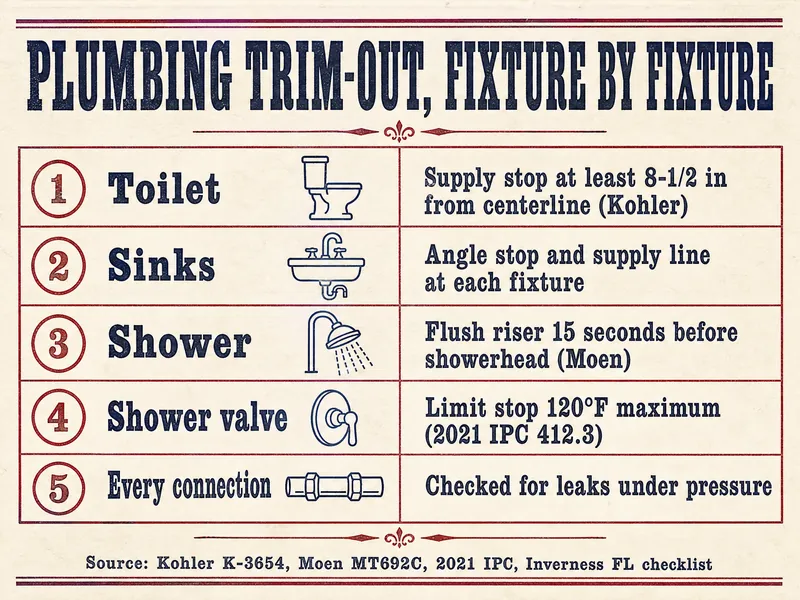
- The Kohler K-3654 toilet sheet says an existing supply stop closer than 8-1/2 inches to the toilet's centerline may need moving.
- Moen's Posi-Temp sheet has the installer flush the shower riser for 15 seconds before the showerhead goes on.
- The 2021 IPC (312.4) calls for a final test of the finished drain and vent system once fixtures are set.
- Shower valve limit stops are set to no more than 120°F at trim, per the 2021 IPC 412.3.
What is plumbing trim-out?
Plumbing trim-out is the second visit to each fixture location, after the walls and floors are finished, when the plumber connects the fixtures you picked to the piping roughed in months or weeks earlier. On a new build it usually comes near the end of the job; in a remodel it follows tile and countertops. It is part of the trim-out and final stage and ends with the final plumbing inspection.
At the end you should see toilets on their flanges, sinks with traps, faucets on the counter, shower handles on the tile, a small valve under every sink and behind every toilet, and no water where it should not be.
What order is plumbing trim-out done in?
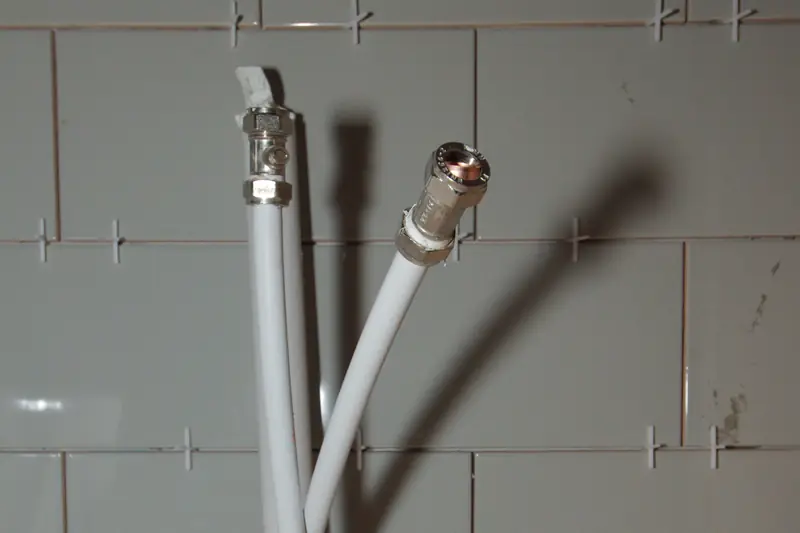
There is no code-set order inside the trim visit, but the sequence is driven by finishes and water. The usual pattern is to set the stops and supply lines first, then the sinks, faucets and drains, then the toilets, and the shower and tub trim last, so the whole house can be turned on and checked together. Water heater start-up is timed so hot water is there when the shower limit stop is set.
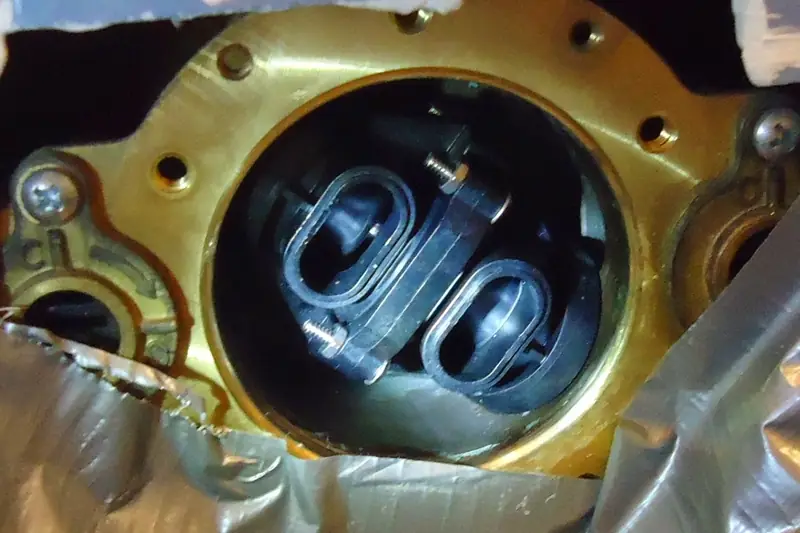
Before anything is connected, new lines get flushed. Moen's Posi-Temp sheet warns that pipe chips, sand and other solids in new and renovated plumbing can damage a valve cartridge, and it has the installer pull the cartridge and flush the body and lines first. That is one reason a plumber may run water through bare stubs before fitting faucets with fine aerators and cartridges.
What are stop valves and supply lines?
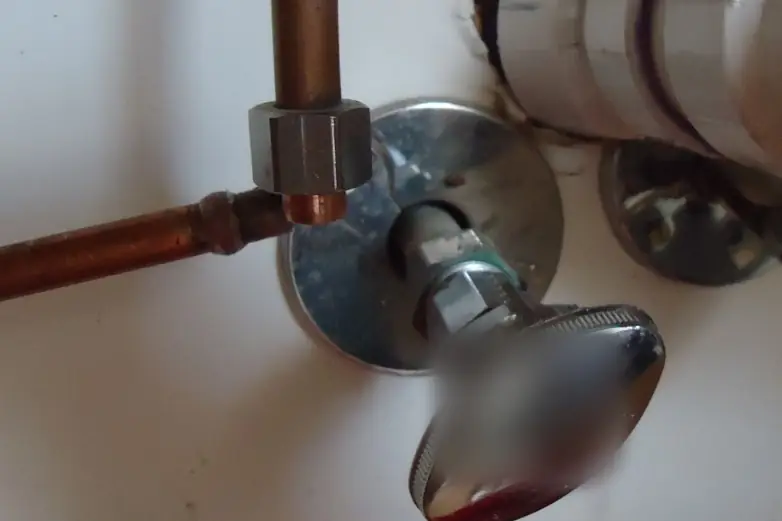
A stop valve is the small shutoff between the house piping and one fixture; the supply line is the short tube from that valve to the faucet or toilet fill valve. Angle stops turn the flow 90 degrees out of a wall, straight stops come up through a floor. They let you shut off one fixture without shutting off the house, and Inverness, Florida's checklist treats them as required at every fixture except residential tubs and showers.
Where the stop sits matters. Kohler's K-3654 toilet sheet says its supplied hose reaches roughly 6 inches and that an existing stop under 8-1/2 inches from the toilet's centerline may need relocating, which is a rough-in height and position question decided long before trim. If you want to see how these parts are named and sized on a bid, Plumbing Supply and More lists angle stop valves (Plumbing Supply and More, run by the owners of Trench to Trim) and braided supply lines (Plumbing Supply and More, run by the owners of Trench to Trim) with their connection sizes, so a line like "3/8 compression angle stop" makes sense. Fitting them stays with the plumber.
How is trim-out checked for leaks?
Every new connection is checked with water running and with the system at full pressure, then again a little later, because slow drips at compression nuts and slip joints often show up only after a while. On showers, Moen's sheet has the installer flush the riser for 15 seconds, install the showerhead and check the system for leaks before the escutcheon goes on.
The inspector does a check of their own. The 2021 IPC section 312.4 calls the final test of the finished drain and vent system visual, in enough detail to confirm code compliance, and it allows a smoke test held at 1 inch of water column for 15 minutes where one is used. West University Place, Texas lists "proper operation with no leaks" for all fixtures on its final checklist. For what happens next, see the final plumbing inspection.
Licensed work at trim-out
- Fixture connections, toilet setting and shower trim on a permitted job are a licensed plumber's work; owner-builder permits exist in some states and cities, and the same inspections apply.
- Setting the shower or tub valve's limit stop to 120°F or less is done by the installer from the valve maker's instructions, not left for later.
- Gas appliance connections and water heater venting are licensed work inspected separately. Smell gas? Get everyone out now, don't flip switches, use phones, light anything or start a car inside, and call 911 or the gas utility once outside and away.
- Your building department and a licensed plumber have the final word.
Which finishes have to be done first?
Anything a fixture or trim plate sits on should be finished first: tile and grout around shower valves and tub spouts, countertops and backsplash under faucets, finished flooring and baseboard around toilets, and paint on the walls behind them. Kohler's sheet notes that a baseboard can cut into the 12-inch rough-in and may have to be trimmed, a good reason to set baseboard before the toilet.
Before the walls closed, the top-out stage should have left each stub capped, tested and at the right height and depth. Shower valve bodies are the touchy one: the Moen sheet gives a depth window for the supply piping behind the finished wall, and a valve set too deep or too shallow for the tile thickness can leave trim that will not seat. Ask about tile thickness at rough-in, not at trim.
What punch-list items come up most?
The common items are small but worth walking through with the plumber before the final.
Walk-through checks before the final
Every stop valve turns
Each sink and toilet stop should shut the fixture off fully and reopen; a stop that will not close is not doing its job.
Hot runs hot
Faucets and shower valves should run hot when turned toward the hot mark; ask the plumber about any that do not.
The shower tops out at 120°F or less
Ask the plumber to show you the limit stop setting and leave the valve's instructions with you.
Toilets do not rock
A toilet should sit solid on the floor; Inverness's checklist asks that all fixtures be fastened properly.
Cabinets are dry
Look under every sink with the water running, and again the next day.
List anything off for the plumber rather than adjusting it yourself; on a permitted job the fix belongs to the licensed contractor. Keep the fixture sheets with the permit.
Numbers from the trim visit
- 8-1/2 inMinimum distance from toilet centerline to an existing supply stop before Kohler says it may need moving (K-3654)Kohler
- 15 secondsShower riser flush before the showerhead goes on (Posi-Temp sheet MT692C)Moen
- 120°FHighest limit-stop setting for a shower valve under the 2021 IPC 412.3International Code Council
- 15 minutesSmoke test hold time where the 2021 IPC final drainage test uses smoke (312.4)International Code Council
- 12 inMinimum rough-in from wall or baseboard for the Kohler K-3654 toiletKohler
| Fixture | What goes in at trim | Finish needed first | What to check |
|---|---|---|---|
| Toilet | Bowl and tank on the flange, stop, supply hose | Floor and baseboard | Stop within reach of the hose; toilet solid |
| Bathroom sink | Faucet, drain, trap, two stops and supply lines | Vanity top and backsplash | Both stops close; cabinet dry |
| Kitchen sink | Faucet, drain, trap, dishwasher and disposal hookups | Countertop | Dishwasher hose secured; no drips |
| Shower or tub-shower | Cartridge, handle, escutcheon, spout, showerhead | Tile and grout | Limit stop at 120°F or less; trim seats flat |
| Laundry | Valves at the outlet box, hoses | Wall finish | Valves turn; no drips at hoses |
Pressman's note
This page is based on the 2021 IPC and IRC from the International Code Council, the plumbing final checklists of Inverness, Florida and West University Place, Texas, Kohler's K-3654 toilet product sheet and Moen's MT692C Posi-Temp valve instructions, all read in October 2026. The fixture order described is common trade practice, not a code rule. Connection steps, tool use and prices are left out; a licensed plumber does this work.
Questions from the job site
Does every fixture need its own shutoff valve?
Not under every code, but it is common; Inverness, Florida's final checklist requires a shutoff at every fixture except tubs and showers in homes. Check the code your city adopted, and ask the plumber to show you each one at the walk-through.
Can old supply lines be reused at trim-out?
In a remodel, the plumber usually decides based on the age and condition of what is there. If you want new stops and supply lines at every fixture, ask for them to be written into the bid so there is no question at trim.
Why does the plumber need the fixtures on site before trim?
Toilets, faucets and shower trims come with their own installation sheets, connection sizes and parts. A missing fixture means the trim visit cannot finish.
Why is my new faucet's flow weak after trim?
Debris from new piping can lodge in aerators and cartridges, which is why Moen's sheet calls for flushing lines before the cartridge goes in. Ask the plumber to check the aerator and cartridge rather than taking the faucet apart yourself.
Is the water heater part of plumbing trim-out?
On a new build it is usually set and started near the trim visit so hot water is on for testing and for the shower limit stop. Its gas, venting and electrical connections are licensed work and may be inspected separately.
Why does the shower riser get flushed before the showerhead goes on?
Rough-in leaves debris in new pipe, and the first water through can carry it into a showerhead or cartridge. Moen's Posi-Temp instructions call for running water through the riser for about 15 seconds before the showerhead is attached. Ask the plumber whether each valve's own sheet asks for the same step.
Keep going
Back to the Trench to Trim job board