Anti-Scald Valves and Hot Water Limits
An anti-scald valve is a shower or tub-shower valve that holds the outlet temperature steady when pressures or temperatures shift, with a limit stop the installer sets so the water never runs above 120°F.
Set by the Trench to Trim desk from code, agency and maker documents · how pages are made · Updated
About the business links: Trench to Trim is run by the same people who own Plumbing Supply and More, SoftPro Water Systems and Quality Water Treatment, and it has a working tie to Central Plumbing & HVAC. No business pays for a mention. Who owns this site
Proof marks
- The 2021 IPC section 412.3 requires pressure-balance, thermostatic or combination shower valves with a limit stop field-set to no more than 120°F.
- The 2021 IRC (P2708.4) and the 2024 UPC (408.4) carry the same 120°F cap for showers and tub-showers.
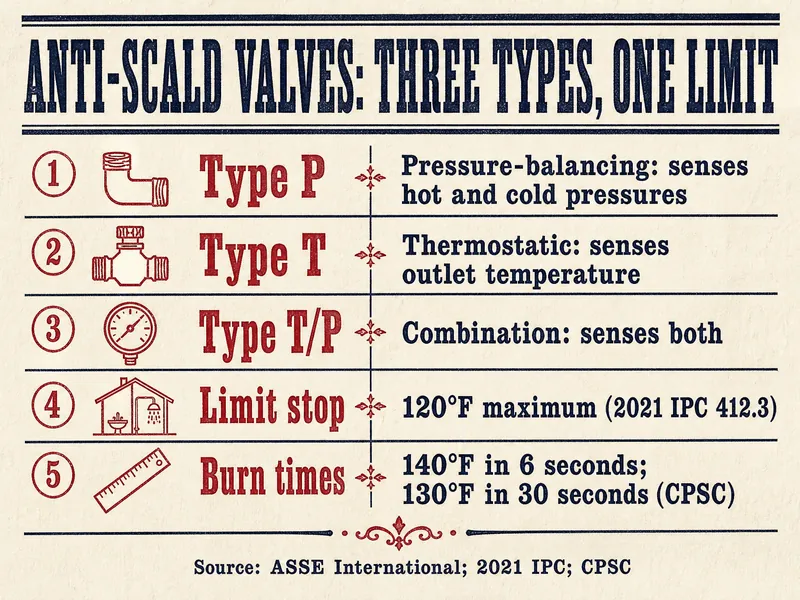
- ASSE International names three valve types under ASSE 1016: Type P, Type T and Type T/P.
- The CPSC says most adults suffer third-degree burns in 30 seconds at 130°F and 6 seconds at 140°F.
- Caleffi says an ASSE 1017 mixing valve at the water heater is not scald protection at the fixture.
- DOE recommends a 120°F water heater setting in its 2022 Energy Saver booklet.
What is an anti-scald valve?
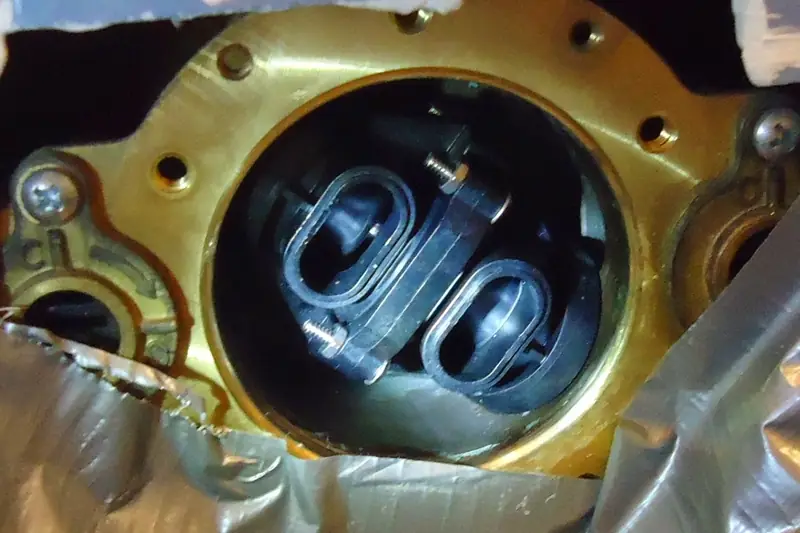
An anti-scald valve is the automatic compensating valve behind a shower or tub-shower handle: it keeps the mixed water near the temperature you picked and caps how hot it can go. ASSE International defines it as a mixing valve that "provides a means of automatically maintaining the water temperature selected for an outlet." The trade calls them pressure-balance or thermostatic valves; inspectors call them compensating valves.
The valve body goes into the wall at rough-in, and the cartridge, handle and trim go on at plumbing trim-out. Model codes have required them in showers and tub-showers for years, in new work and in replacements, and the standards they are tested to are ASSE 1016/ASME A112.1016/CSA B125.16 or ASME A112.18.1/CSA B125.1.
What does the 120°F limit mean?
The 120°F limit is the hottest water the shower or tub-shower valve may deliver once its limit stop is set, under the 2021 IPC 412.3, 2021 IRC P2708.4 and 2024 UPC 408.4.2. The IPC wording says the stop is "field adjusted in accordance with the manufacturer's instructions," which means it is set on site, with hot water running, not at the factory.
The number matters because burns come fast. The CPSC's scald publication says most adults get third-degree burns from 150°F water in 2 seconds, 140°F in 6 seconds and 130°F in 30 seconds, and that even 120°F for five minutes can do it. It also says most tap-water scald injuries and deaths are to older people and children under five.
Bathtubs that are not tub-showers have their own rule. The 2021 IPC (412.5) and IRC (P2713.3) require an ASSE 1070 temperature-limiting device for a tub or whirlpool filler, and the 2024 UPC (409.4) caps that water at 120°F as well. Ask about it if your bid includes a freestanding or soaking tub.
Who does what with scald limits
- Choosing, installing and setting a shower, tub or mixing valve on a permitted job is a licensed plumber's work, following the valve maker's instructions.
- Never ask for a water heater setting above 120°F to get "hotter showers"; if a household member needs a higher tank setting for Legionella control, the CDC says to talk with a healthcare provider and use mixing valves.
- Water heater gas, venting, relief valve and electrical work is licensed work. Smell gas? Get everyone out now, don't flip switches, use phones, light anything or start a car inside, and call 911 or the gas utility once outside.
- Your building department and a licensed plumber have the final word.
How do pressure-balance and thermostatic anti-scald valves differ?
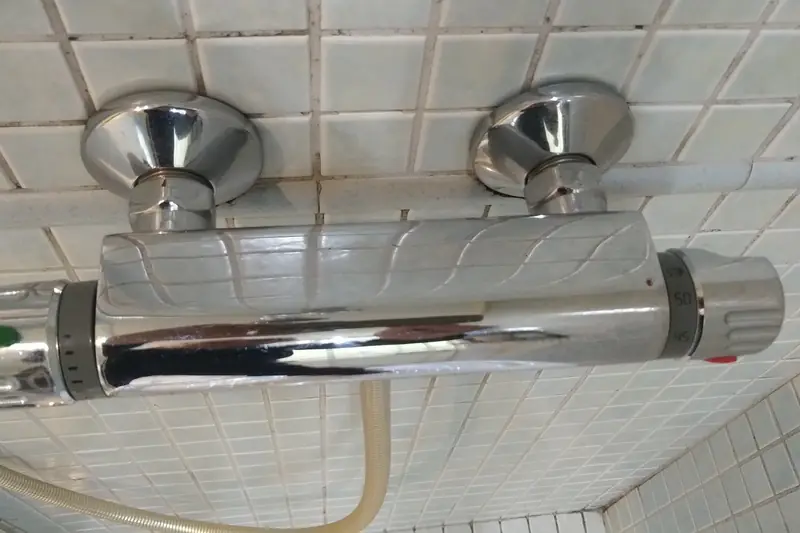
A pressure-balance valve reacts to pressure; a thermostatic valve reacts to temperature. ASSE International's definitions spell it out: Type P senses the hot and cold inlet pressures and compensates for changes in them, Type T senses the outlet water temperature and compensates for thermal changes, and Type T/P does both.
In practice, a pressure-balance valve is what stops the shower from turning scalding when someone flushes a toilet and the cold pressure drops. A thermostatic valve also responds when the incoming hot or cold temperature drifts, such as when a tank is nearly spent. Both satisfy the model codes; the choice comes down to trim style, the household and the plumber's advice, and it should be settled before top-out, because the valve body is buried in the wall.
| Device | Standard | Where it goes | What it does |
|---|---|---|---|
| Pressure-balance shower valve (Type P) | ASSE 1016 | In the shower or tub-shower wall | Compensates for hot and cold pressure changes; limit stop caps temperature |
| Thermostatic shower valve (Type T) | ASSE 1016 | In the shower or tub-shower wall | Senses outlet temperature and compensates; limit stop caps temperature |
| Combination valve (Type T/P) | ASSE 1016 | In the shower or tub-shower wall | Senses both pressure and temperature |
| Temperature-limiting device | ASSE 1070 | At a tub filler or sink | Limits temperature at that fixture |
| Heater mixing valve | ASSE 1017 | At the water heater | Tempers water leaving the heater; not fixture scald protection |
Who sets the anti-scald valve's limit stop?
The installer sets the limit stop, following the maker's steps, as soon as the house has hot water. ASSE International's white paper says that where hot water is not on at installation, it is the installer's responsibility to return and set it, and that the plumbing inspector should note on the final report that limit stops were not set or checked.
Makers say the same thing in their own words. Moen recommends limiting the shower to 120°F or less to prevent scalding and has the stop checked with a thermometer. ASSE adds that seasonal changes in incoming cold water, a new water heater or a new heater setting can all call for resetting, and that the maker's instructions should be left with the owner. That is your cue at the walk-through: ask the plumber to show you the setting and hand over the valve sheet.
Where do mixing valves fit?
A thermostatic mixing valve at the water heater blends hot and cold water before it goes into the house piping, but it does not replace the shower valve. Caleffi's instructions for its 5231 series say an ASSE 1017 valve installed at the heater cannot temper water at fixtures and is "not designed to provide scald protection." Its TankMixer sheet recommends limiting the mixed water to 120°F and installing scald protection at each fixture.
The 2021 IPC also says in-line thermostatic valves cannot be used to meet the shower-valve rule. So the shower still needs its own compensating valve and limit stop, even when a heater mixing valve is in place. To see how heater mixing valves are named and specified on a bid, Plumbing Supply and More lists them on its mixing valves page (Plumbing Supply and More, run by the owners of Trench to Trim); choosing and fitting one stays with the plumber.
Why does water heater temperature matter too?
The water heater sets the hottest water the valves have to work with, but its thermostat is not precise enough to be the final control. ASSE's water heater white paper explains that repeated short draws can stack very hot water at the top of a tank, above 140°F, even with the dial at 120°F, and that model codes bar using the heater thermostat as the final temperature control.
DOE and the CPSC both recommend 120°F at the heater. The CDC notes that 130–140°F can kill Legionella but raises burn risk, and says to use thermostatic valves at the tap if the heater is set above 120°F. The settings for the heater itself are covered on water heater placement and sizing.
Scald numbers
- 120°FMaximum shower valve limit-stop setting (2021 IPC 412.3, 2021 IRC P2708.4)International Code Council
- 2 secondsTime for third-degree burns in most adults at 150°FCPSC
- 30 secondsTime for third-degree burns in most adults at 130°FCPSC
- 3Compensating valve types under ASSE 1016: P, T and T/PASSE International
- 140°F+Water that can stack at the top of a tank set to 120°FASSE International
Pressman's note
This page uses the International Code Council's 2021 IPC and IRC, IAPMO's 2024 UPC, two ASSE International white papers on limit stops and water heater scald hazards, the CPSC's "Avoiding Tap Water Scalds," DOE's 2022 Energy Saver booklet, the CDC's home water page, Caleffi's mixing valve instructions and Moen's limit stop article, read in October 2026. It does not explain how to take a valve apart or adjust a stop, and it gives no prices or brand rankings.
Questions from the job site
Can an old two-handle shower valve be kept in a remodel?
ASSE International notes that older two-handle valves may be non-compensating and recommends replacing them with a code-compliant compensating valve. Whether your city requires that in a remodel depends on its code and the permit scope, so ask the building department and the plumber.
Why does my new shower not get very hot?
A limit stop set at or below 120°F can feel cooler than an old valve with no limit, and Moen notes the handle's hottest position also depends on the water heater setting. If it seems too cool, ask the plumber to check the stop and the heater rather than raising the heater setting.
Does a thermostatic valve need a limit stop too?
Yes. The 2021 IPC requires a means to limit the maximum setting on balanced-pressure, thermostatic and combination valves alike, field-set to 120°F or less.
Is a scald-guard faucet required on a bathroom sink?
The model code sections read for this page cover showers, tub-showers and tub fillers, not ordinary lavatory faucets. Some codes and cities have their own lavatory rules, so check with your building department.
Will the inspector test the shower temperature at the final?
Inspectors vary. ASSE International says the inspector should note on the final report when hot water was not available and limit stops were not set or checked. Have the water heater running before the final so the plumber can set the stop first.
Does a tankless water heater remove the need for an anti-scald valve?
No. The shower-valve rules in the 2021 IPC and 2024 UPC apply whatever heater serves the house, and a compensating valve still protects against pressure swings at the shower.
Keep going
Back to the job board, stage by stage