The Underground Plumbing Inspection
An underground plumbing inspection checks buried drain pipe in the open trench, usually under a 10-foot head of water held at least 15 minutes, before any backfill or concrete covers it.
Set by the Trench to Trim desk from code, agency and maker documents · how pages are made · Updated
Proof marks
- The 2021 IPC (108.2) sets the underground inspection after trenches are dug and bedded and pipe is installed, "before any backfill is put in place."
- The water test in the 2021 IPC and IRC and the 2024 UPC fills the drains to at least a 10-foot head and holds it 15 minutes with no leaks.
- An air test runs at 5 psi for 15 minutes, but the IPC and UPC bar it on plastic pipe; the 2021 IRC offers plastic a -5 psi vacuum test instead.
- Water lines are tested at no less than working pressure for 15 minutes under the 2021 IPC (312.5), and PEX may be air tested only where its maker allows.
- In West University Place, Texas, the in-ground test lasts 20 minutes, and an empty test stack means no concrete.
- Plumbing buried before approval has to be dug out again on the inspector's notice under the 2024 UPC (105.2.1).
What happens at an underground plumbing inspection?
An inspector from the building department looks at the buried pipe while the trench is still open and the system is under test. The 2021 IPC names it as one of three plumbing inspections (underground, rough-in and final), and times it for the moment the trench is open and the pipe is laid. The 2024 UPC (105.2) uses the same three stages with nearly identical wording.
The permit holder books the visit; under the IPC, "The holder of the permit shall be responsible for the scheduling of such inspections." Before the date, the plumber fills and plugs the system so the test is already holding when the inspector arrives. For how this stage fits the whole job, see underground plumbing and, earlier, the plumbing permit that makes the inspection possible.
How does the underground water test work?
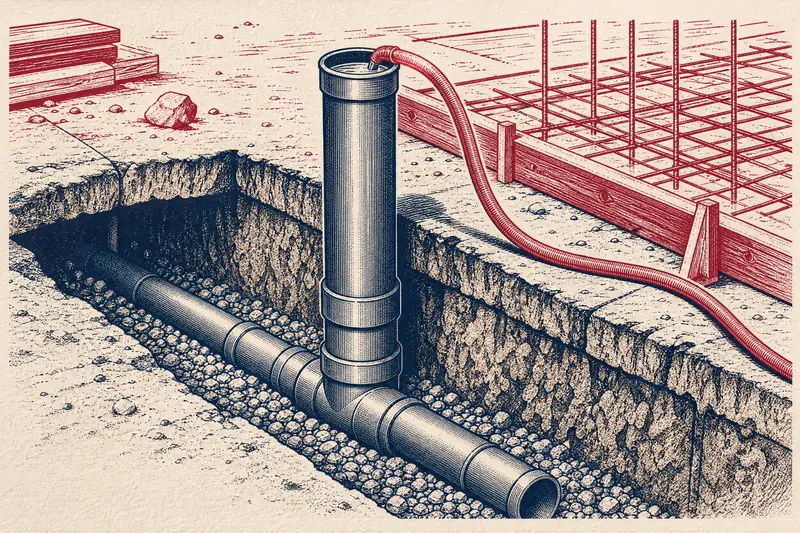
The plumber plugs every low opening, then fills the drains with water until it stands at least 10 feet above the pipe being tested. Under 2021 IPC 312.2, no section may be tested with less than a 10-foot head, and the water "shall be held for not less than 15 minutes." The IRC (P2503.5.1) measures the 10 feet from the highest fitting in the section, and the 2024 UPC (712.2) wants the water in place 15 minutes "before inspection starts."
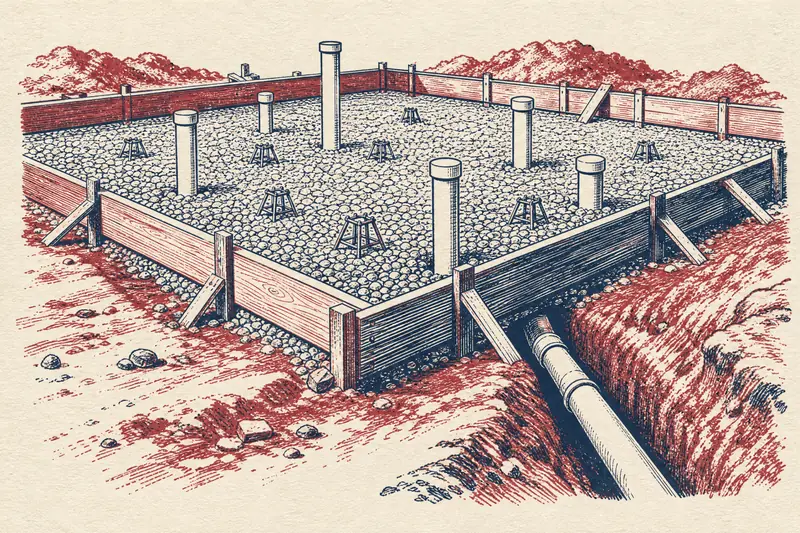
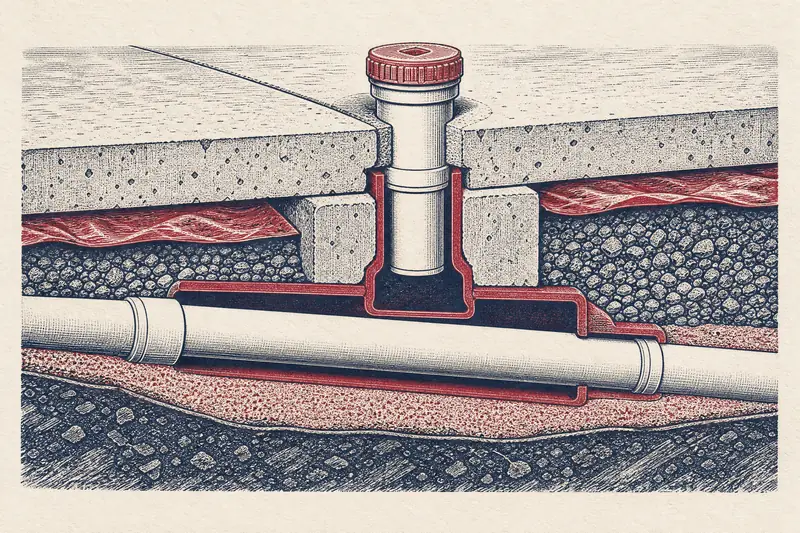
On a slab job the head usually comes from a temporary test riser or a stack extended upward and filled to the top. The inspector then looks for two things: a drop in the water level at the top, and wet joints or weeping fittings along the trench. West University Place's checklist describes its version as a 20-minute test "with no drop" using a 4-inch stack filled to the top.
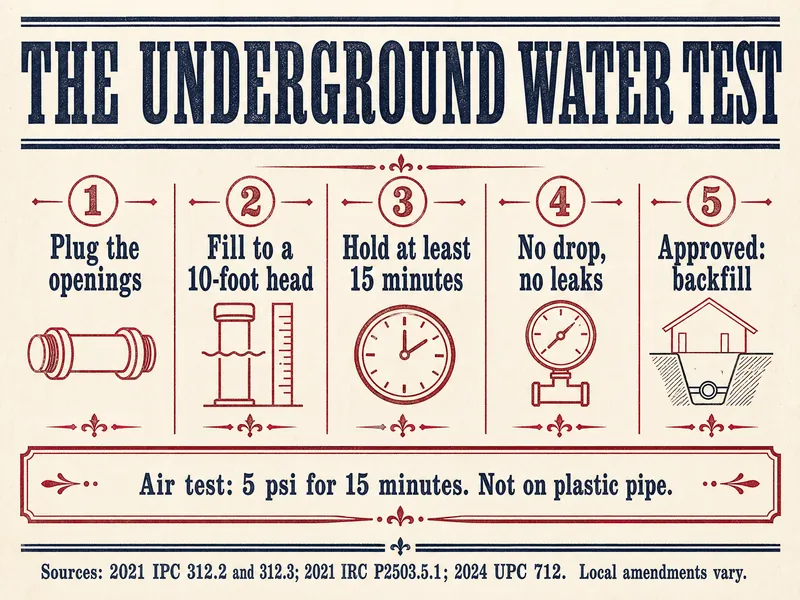
On site it comes down to this: plug the openings, fill to a 10-foot head, hold at least 15 minutes, and look for no drop, no leaks. Approved: backfill.
Can an air test be used instead?
Only on metal pipe. The 2021 IPC (312.3) air test pumps the system to 5 psi, or enough to balance a 10-inch column of mercury, and holds it at least 15 minutes, but states "Plastic piping shall not be tested using air." The 2024 UPC (712.1 and 712.3) has the same 5 psi, the same 15 minutes and the same ban on plastic.
The 2021 IRC adds a third choice for plastic pipe: a vacuum test that pulls the system to -5 psi (negative 10 inches of mercury) and holds it 15 minutes. Where the drains under your slab are PVC or ABS plastic, expect a water test unless your plumber names the vacuum method and your city accepts it. Ask which test is planned when you compare plumbing bids.
What does the underground inspector look at besides the test?
The test proves the pipe holds water; the rest of the visit checks that it was installed to code. Inspectors commonly look at pipe material and markings, slope, bedding, cleanouts and sleeves. West University Place spells out its list: Schedule 40 PVC only "if PVC," purple primer, a 4-inch sewer line with a two-way cleanout 18 inches from the foundation, drain pipe through beams sleeved two sizes larger, and "all fittings should be exposed and all material labels visible."
Water lines under the slab get their own test. The 2021 IPC (312.5) requires water supply piping to hold water at no less than the system's working pressure, or air at 50 psi for non-plastic pipe, for at least 15 minutes, using water from a potable source. The 2021 IRC (P2503.7) lets PEX be tested with compressed air only where the PEX maker's instructions allow it, and West University Place asks for line pressure or a 75 psi air test on water looped under the slab. Slope, sleeves and cleanouts are explained on the under-slab plumbing page.
What if the underground test leaks?
A leak or a falling water level means the inspection does not pass, and nothing gets covered. The plumber finds the joint, repairs it, refills the system and asks for a reinspection; under the IPC, work may not continue past an inspection point until that point is approved. A failed test this early costs time, not concrete, which is exactly why it happens here.
Keep the correction notice and photograph the repaired joint before it is retested. Why plumbing inspections fail covers the common reasons and how corrections are handled.
When can the trench be backfilled?
After the inspector approves the work, not before. The 2021 IPC says "Work shall not be done beyond the point indicated in each successive inspection," and the 2024 UPC lets the inspector order covered plumbing uncovered. Some cities tie the water test to the pour itself: West University Place wants water left in the drains until the concrete is placed, and if the test stack is empty "a leak will be assumed" and no concrete is poured.
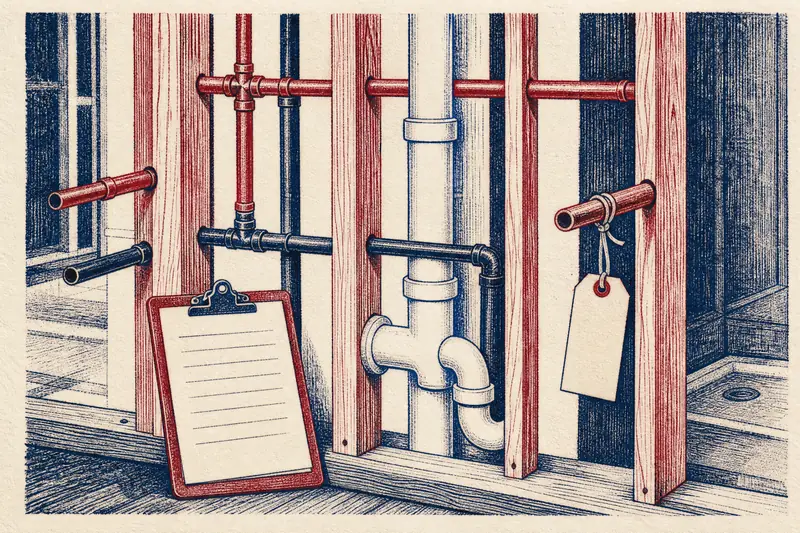
Once the trench is closed and the slab is in, the next plumbing stage is rough-in, inspected before the walls are covered.
At the inspection
Ask the plumber
The time slot for the visit, the test being used, and if test water must stay in the drains during the pour.
Watch from the edge
A full test stack and dry joints along the trench; don't step into the trench.
Keep
A photo of the signed card or the online approval, and any correction notice with the date it was cleared.
Plumber's and inspector's calls
- The test method, pressure and time are set by the code your city adopted and by your inspector; some jurisdictions ask for longer than 15 minutes.
- Air or gas testing of PEX happens only where the pipe maker's instructions allow it.
- Repairs to a failed joint are the licensed plumber's work, followed by a retest and reinspection.
- Nothing is backfilled or poured until approval is recorded.
- Your building department and a licensed plumber have the final word.
Test numbers
- 10 ftwater column above the tested drain2021 IPC 312.2
- 15 minhow long the water must stand2021 IRC P2503.5.1
- 5 psiair test pressure, banned on plastic pipe2024 UPC 712.3
- -5 psivacuum test the IRC allows on plastic drain pipe2021 IRC P2503.5.1
- 50 psiminimum air test on non-plastic water pipe2021 IPC 312.5
- 20 minlocal in-ground test, no drop allowedWest University Place, TX
| Test | Pressure or head | Minimum time | Plastic pipe allowed? |
|---|---|---|---|
| Drain water test (2021 IPC and IRC, 2024 UPC) | 10-foot head of water | 15 minutes | Yes |
| Drain air test (2021 IPC, 2024 UPC) | 5 psi or 10 inches of mercury | 15 minutes | No |
| Drain vacuum test (2021 IRC) | -5 psi or negative 10 inches of mercury | 15 minutes | Yes |
| Water supply test (2021 IPC) | Water at working pressure, or 50 psi air | 15 minutes | Air not allowed on plastic |
| West University Place, TX in-ground | 10-foot head, 4-inch stack filled to top | 20 minutes, no drop | If PVC, Schedule 40 only |
Pressman's note
The test rules here were read in the model codes on October 28, 2026: IPC 2021 (108.2, 312.2, 312.3, 312.5, 312.6), IRC 2021 (P2503.5.1, P2503.7, R105.5) and UPC 2024 (105.2, 105.2.1, 712). Local examples come from West University Place's in-ground checklist and Kentucky's homeowner permit FAQ. Inspection and reinspection fees differ by city and are left out, as are all prices.
Questions from the job site
Who schedules the underground plumbing inspection?
The permit holder, which is usually the plumbing contractor. The 2021 IPC puts that duty on the holder of the permit. If you pulled an owner-builder permit, it falls to you.
Does the inspector need water in the pipe when they arrive?
Yes, for a water test. The 2024 UPC wants the water in place at least 15 minutes before inspection starts, and some cities treat an empty test stack as a leak.
Can a homeowner do their own underground plumbing?
In some places, under an owner-builder permit, and the same tests and inspections apply. Kentucky, for example, requires the owner to perform every bit of the work and follow the state plumbing code, and issues one new-home homeowner permit per person in five years. Check your state and city rules first.
How long is a permit good for between inspections?
Under the 2021 IRC (R105.5), a permit becomes invalid if work doesn't start within 180 days or if more than 180 days pass between inspections, though the building official can extend it in writing. Your city's rules decide.
Is the sewer line tested at the same time?
The building sewer may be tested during the same open-trench visit or on its own. The 2021 IPC (312.6) tests it with at least a 10-foot head of water for 15 minutes. Ask the plumber which way your city handles it.
What is a test plug?
A test plug is a rubber or mechanical stopper that seals a pipe opening so the system can hold water or air during a test. The plumber removes it after approval. It is a test tool, not part of the finished system.
Can I take my own photos during the inspection?
Yes, and you should, from outside the trench. Photograph the full test stack, each joint area, the pipe labels and the signed card. Those pictures are your record of what lies under the slab.
Related pages