Plumbing a Water Softener Loop at Rough-In
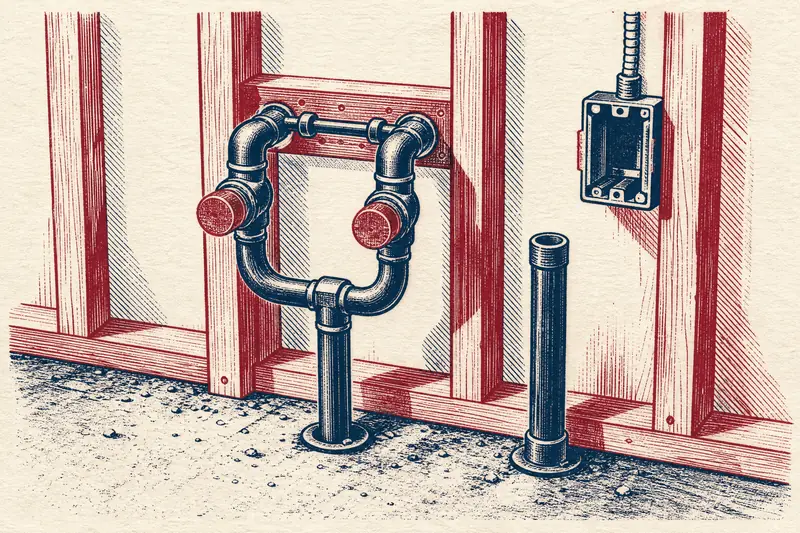
A water softener loop is a short detour of the main water line, roughed in near where it enters the house, so a softener or filter can be connected later without opening finished walls.
Set by the Trench to Trim desk from code, agency and maker documents · how pages are made · Updated
About the business links: Trench to Trim is run by the same people who own Plumbing Supply and More, SoftPro Water Systems and Quality Water Treatment, and it has a working tie to Central Plumbing & HVAC. No business pays for a mention. Who owns this site
Proof marks
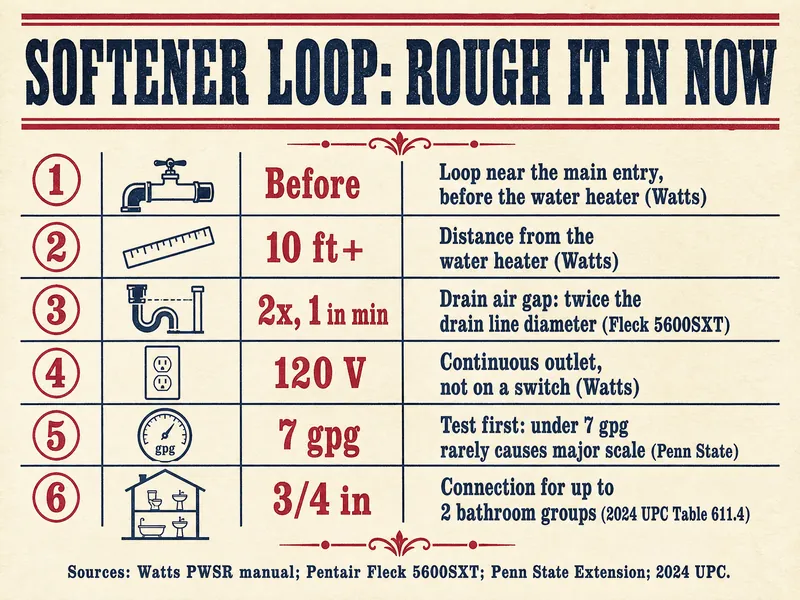
- Penn State Extension says toilets, outside spigots and basement sinks can bypass a softener, and some homes soften only the hot water.
- The same source rates water under 7 grains per gallon as unlikely to cause major scaling, and says to test with a third-party lab first.
- The Watts PWSR softener manual says to connect before the water heater and keep the softener at least 10 feet from it.
- Watts also wants a continuous 120-volt supply that another switch cannot turn off, and always a bypass valve.
- Pentair's Fleck 5600SXT manual requires a drain air gap twice the drain line's diameter, never under 1 inch.
- The 2024 UPC (Table 611.4) sizes a home softener connection at 3/4 inch for up to 2 bathroom groups and 1 inch for up to 4.
What is a water softener loop?
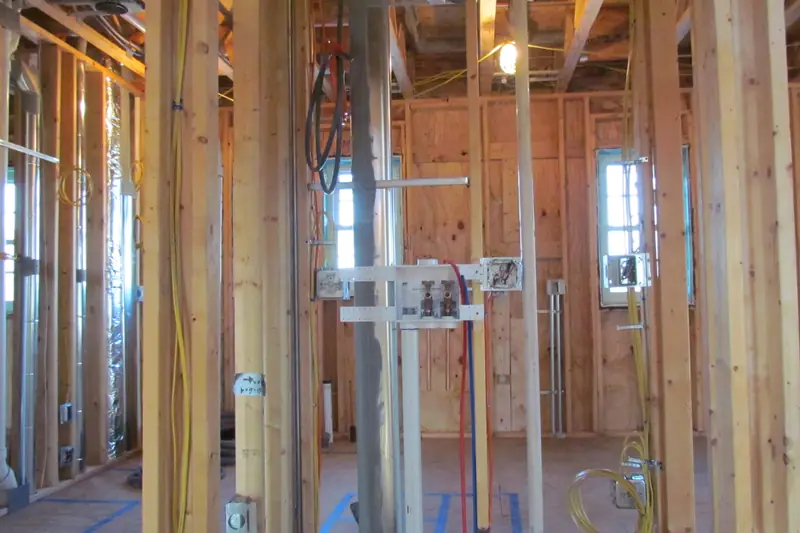
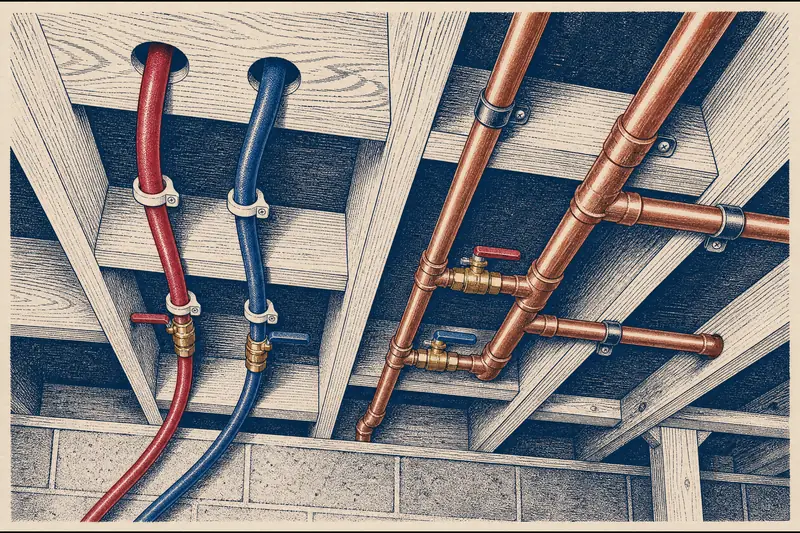
A water softener loop is the main cold line brought out to one accessible spot as an "out and back" pair of stubs, capped or joined by a temporary bypass, before it branches to the fixtures you want treated. Later, a plumber cuts in the softener or filter at that spot instead of opening walls. It is a rough-in decision because the loop has to sit upstream of the branches it serves.
Equipment makers describe the same position. Pentair's whole-house softener manual says to install the system "close to the water supply inlet, and upstream of all other plumbing connections, except outside water pipes." Watts says to "always provide for the installation of a bypass valve," so water keeps flowing during service.
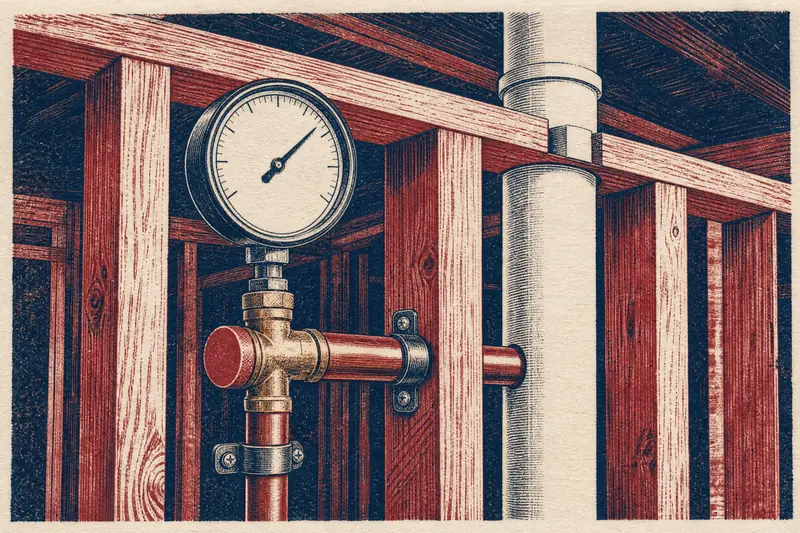
Pipe size matters too. The 2024 UPC (610.2) says a softener or filter may not cause an excessive pressure drop, and where no pressure data exists, its connections must be no smaller than the distribution piping it serves. Its Table 611.4 sets a 3/4-inch softener connection for up to 2 bathroom groups and 1 inch for up to 4, with larger homes engineered.
Which lines should the loop skip?
The loop should skip lines that do not need softened water, mainly outdoor hose bibbs and, if you choose, toilets. Penn State Extension says "showers, sinks, and laundry hookups probably should be softened; toilets, outside spigots, and basement sinks can be bypassed," and adds that some households soften only the hot water. Pentair's manual likewise keeps outside faucets on untreated water.
Skipping a line means it has to branch off the main before the loop. That is easy on paper and hard after drywall, so mark on the rough-in plan which branches leave ahead of the loop: hose bibbs, irrigation, and any toilet or utility sink you want left hard. Irrigation also brings its own backflow rules, covered under backflow preventers and expansion tanks.
Softened water adds sodium. Penn State puts it at 7.5 milligrams per quart for each grain per gallon of hardness removed. If you want any tap left on untreated water, decide before the branch layout is set.
Where should the loop go?
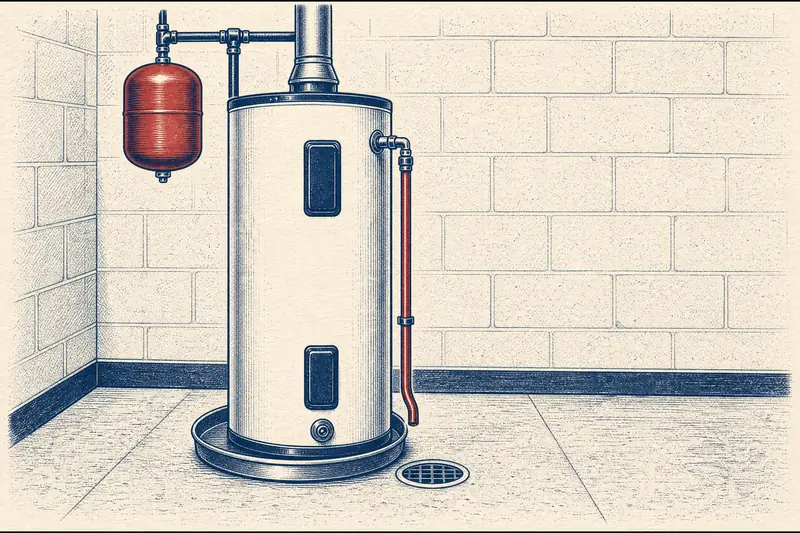
The loop should go where the main enters the house, ahead of the water heater, in a dry spot that does not freeze and has floor space for tanks. Watts' manual says to "always connect the system to the main water supply pipe before the water heater," and to keep the softener at least 10 feet from the heater so hot water does not back up into it. Pentair warns against short pipe runs between the two for the same reason.
The Watts manual also says the location must be level and strong enough to carry the full system's weight, out of direct sunlight, and never exposed to freezing. Both Watts and the Fleck 5600SXT manual cap incoming water at 110°F, which is another reason the loop belongs on the cold side. A garage, basement or utility room near the main shutoff is the usual pick; ask the plumber to leave room for a brine tank beside the resin tank.
What drain and power does it need?
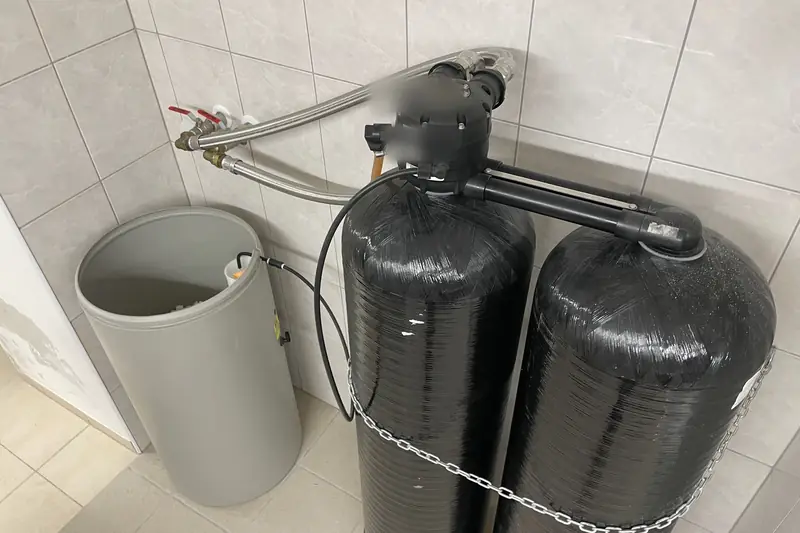
A softener needs a drain for its regeneration water and a constant electrical outlet, and both should be roughed in beside the loop. Pentair lists three site needs: the main water source, a drain, and an electrical connection. Its Fleck 5600SXT manual requires an air gap on the drain line of twice the line's diameter, with a 1-inch minimum, and Pentair notes that "most local codes require an air gap." The 2024 UPC (611.2) requires discharge from the treatment units in its Table 611.1, softeners included, to reach the drain through an air gap.
Watts calls for a drain line of at least 1/2 inch, and 3/4 inch for runs over 20 feet. On power, Watts says "a continuous 120 volt, 60 Hertz current supply is required" that cannot be switched off with another switch, from a grounded outlet; the outlet itself is an electrician's job. In metal plumbing, Pentair warns a softener can break the pipe's electrical ground path, and it recommends grounding clamps and a ground cable from the inlet to the outlet pipe.
Should you test the water first?
Yes: test the water before choosing a softener, but rough in the loop either way, since it is simple to add now and hard to add after drywall. Penn State Extension says a third-party lab test is best, even where softener sellers offer free testing, and its companion page notes there is no federal or state hardness standard. One grain per gallon equals about 17 milligrams per liter.
Penn State's scale runs from soft (under 1.0 gpg) to very hard (over 10.5 gpg), and it says levels below 7.0 gpg "will probably not cause major scaling." A tankless heater raises the stakes, since DOE's Building America team warns that hard water damages tankless units; read water heater sizing and placement alongside this page. Where a test does show hard water, a softener such as the SoftPro ECO (SoftPro Water Systems, run by the owners of Trench to Trim) is one option, and the loop lets you add it without opening walls.
Can a whole-house filter use the same loop?
Yes, a whole-house filter can use the same loop if it is long enough and has room for each housing, with the order and spacing taken from each maker's manual. The 2024 UPC Table 611.1 lists NSF/ANSI 44 for residential softeners and NSF/ANSI 53 for contaminant-reduction filters, so check the listing on whatever goes in. Ask the plumber to leave enough straight pipe for a filter, a softener and their bypasses.
If you want to see how filter housings and cartridges are named and rated before you read a bid line, Plumbing Supply and More lists water filters and housings (Plumbing Supply and More, run by the owners of Trench to Trim), and Quality Water Treatment shows the same SoftPro ECO softener (Quality Water Treatment, run by the owners of Trench to Trim). Cutting them into the loop stays with the licensed plumber.
| Item | What to ask for | Source |
|---|---|---|
| Loop stubs and bypass | Main cold line out and back, ahead of fixture branches, with a bypass | Pentair 37297; Watts PWSR |
| Branches left untreated | Hose bibbs and irrigation off the main first; toilets optional | Penn State Extension |
| Drain | Floor drain, standpipe or laundry tub within reach, with an air gap | Fleck 5600SXT; 2024 UPC 611.2 |
| Power | Continuous, grounded 120-volt outlet, not switched | Watts PWSR |
| Pipe size | Connection no smaller than the piping it serves; 3/4 or 1 inch by bathroom groups | 2024 UPC 610.2, Table 611.4 |
Numbers for the loop
- 10 ftminimum distance from softener to water heater in one maker's manualWatts PWSR
- 7 gpghardness below which major scaling is unlikelyPenn State Extension
- 17 mg/Labout one grain per gallon of hardnessPenn State Extension
- 3/4 insoftener connection for up to 2 bathroom groups2024 UPC Table 611.4
Licensed work and code calls
- Cutting the loop into the main, the bypass, the drain and its air gap are a licensed plumber's work under a permit where your city requires one.
- The outlet and any grounding jumper across metal pipe are electrical work; an electrician or the plumber, as your city allows, does them.
- Whether irrigation or a hose bibb needs a backflow device, and which kind, is your water utility's and inspector's call.
- Your building department and a licensed plumber have the final word.
Pressman's note
This page is based on Penn State Extension's Water Softening and public water testing pages, the Watts PWSR softener manual, Pentair's whole-house softener manual 37297 and Fleck 5600SXT service manual, DOE's Building America tankless report and the 2024 UPC sections 610 and 611, read in October 2026. No health claims about softened water are made beyond Penn State's sodium figure, and no prices are given.
Questions from the job site
Is a softener loop required by code?
No model code requires one. It is a builder's or owner's choice that saves opening walls later. If equipment is added, the install itself follows the plumbing code and any permit rules where you live.
Can the loop go in a garage that freezes?
Avoid it. Watts and the Fleck manual both say the unit must not freeze, and pipes in an unheated garage need protection too. Choose a heated space or ask the plumber how the area will be kept above freezing.
Should the kitchen cold tap skip the softener?
That is a household choice, not a rule. Penn State notes softening adds sodium, 7.5 milligrams per quart per grain removed, and suggests which lines can bypass. Decide before rough-in so the branch can be piped ahead of the loop.
How long should the loop be?
Long enough for the equipment and bypasses you might add, set by each maker's manual. A loop sized only for a softener may not fit a filter later. Ask the plumber to leave straight pipe and wall space for both.
Where does the brine water go?
Into the house drain through an air gap, such as a floor drain, standpipe or laundry tub. Pentair notes most local codes require the air gap, and the Fleck manual sets it at twice the drain line's diameter, 1 inch minimum. Your inspector checks the connection.
Does a home on city water need a softener?
Not necessarily. Hardness varies by source, and Penn State says levels under 7 grains per gallon rarely cause major scaling. A lab test tells you; the loop just keeps the option open.
More on rough-in