Stage 03 · 7 sheets
Rough-In Plumbing, Before the Walls Close
Rough-in plumbing is the drain, vent and water piping set inside open walls and floors, then tested and inspected before any insulation, drywall or ceiling goes up.
Set by the Trench to Trim desk from code, agency and maker documents · how pages are made · Updated
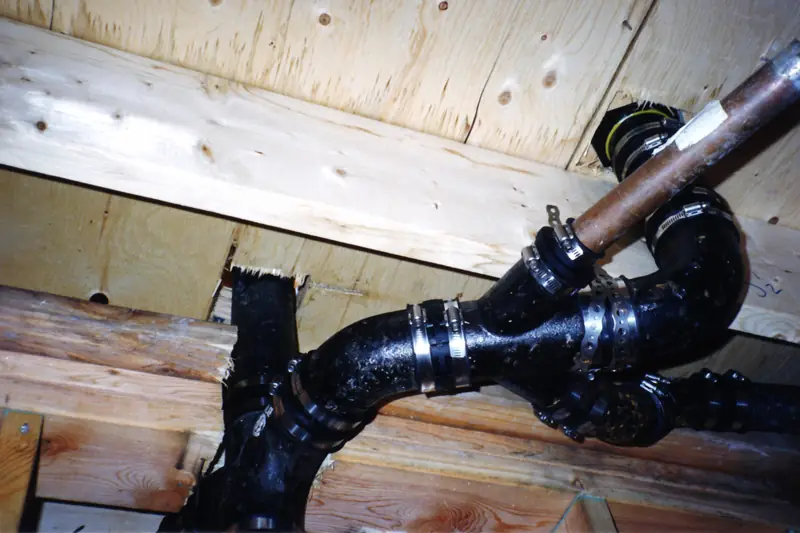
Proof marks
- The 2021 IPC names three plumbing inspections (underground, rough-in and final) and puts rough-in before any wall or ceiling membrane goes on.
- Under the 2021 IRC, the rough plumbing inspection comes before covering, before fixtures are set and before the framing inspection.
- Drain, waste and vent pipe is tested at rough-in: a 10-foot head of water for 15 minutes under the 2021 IPC and IRC and the 2024 UPC; some jurisdictions ask for longer.
- 1/4 inch per foot is the safe default for drain slope everywhere; 1/8 inch is allowed for 3-inch and larger pipe under the 2021 IPC/IRC and only with approval for larger building drains under the 2024 UPC.
- The 2021 IRC and IPC call for a 16-gauge steel plate where a pipe is within 1-1/4 inches of the stud face; 2024 UPC areas use 1 inch and 18 gauge.
- "Top-out" is a local inspection name, not a model-code one: Rio Rancho, New Mexico lists rough-in, top-out and final.
Calls for the plumber and the inspector
- Pipe sizes, vent layout and drain slope are a licensed plumber's design; the inspector decides whether they pass.
- Gas piping, water heater venting and combustion air, and backflow devices are licensed work on every job.
- Nothing gets covered until the rough-in inspection is approved; under the 2024 UPC, covered work can be ordered uncovered.
- Whether air admittance valves are allowed, and whether PEX may be air tested, depends on your adopted code and the pipe maker's instructions.
- Your building department and a licensed plumber have the final word.
What is rough-in plumbing?
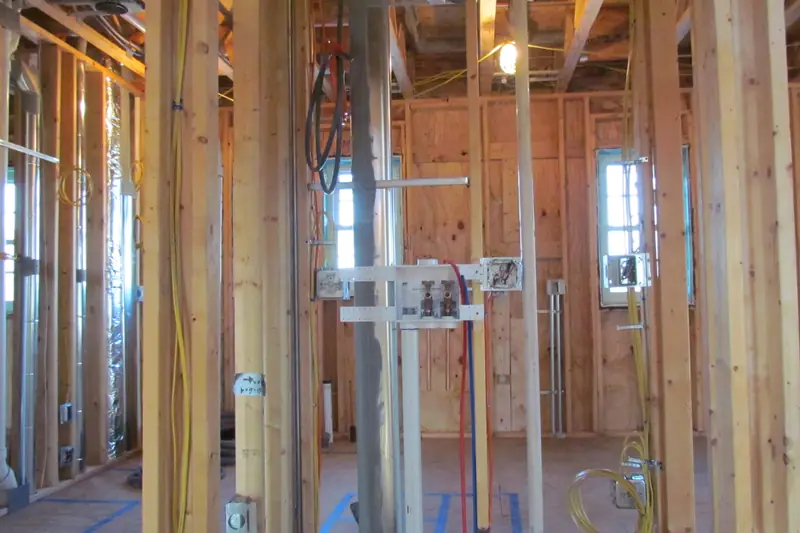
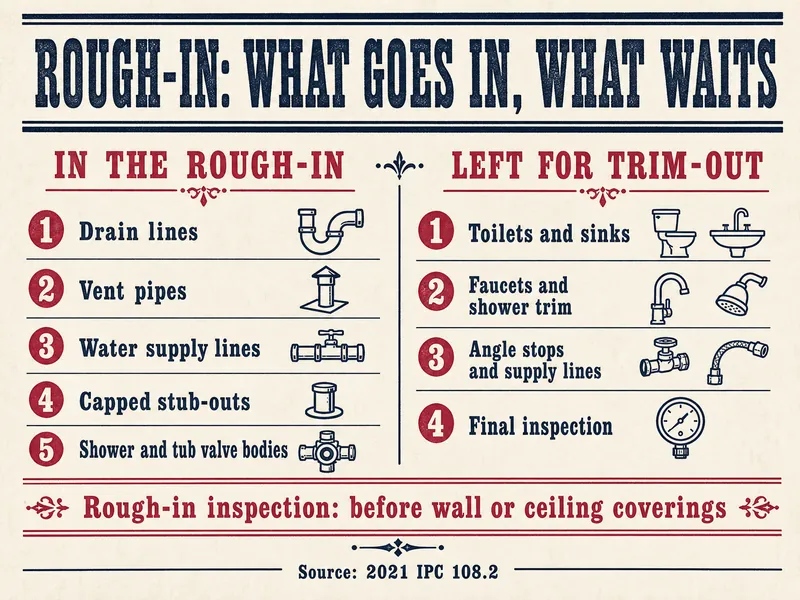
Rough-in plumbing is every pipe that will end up hidden: drains, vents and water lines run through open framing and capped where fixtures will go. The 2021 IPC sets the rough-in inspection by timing, after the roof, framing, fireblocking and bracing are in place and the piping is roughed in, and before wall or ceiling membranes go up. It sits between the underground stage, where pipe is laid below the slab, and top-out, when the in-wall work is finished and tested again.
At this stage the work is getting pipe to the right spots at the right size and slope, then proving it holds water.
What is included in a plumbing rough-in?
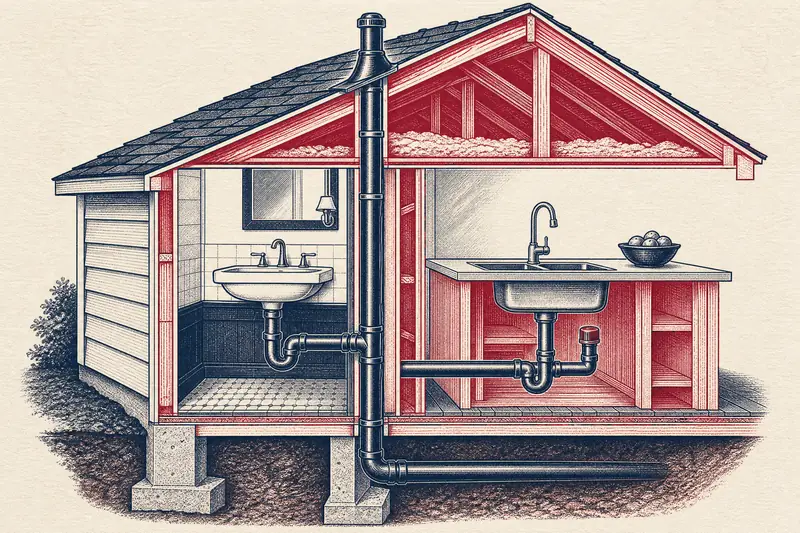
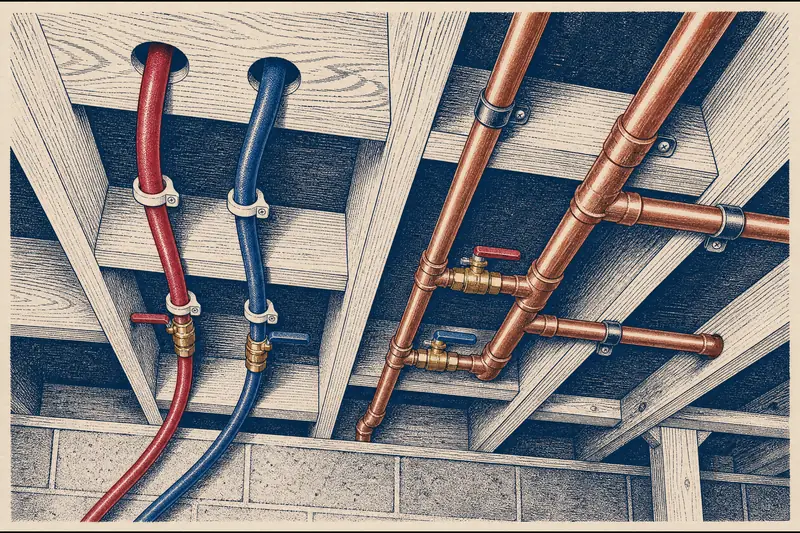
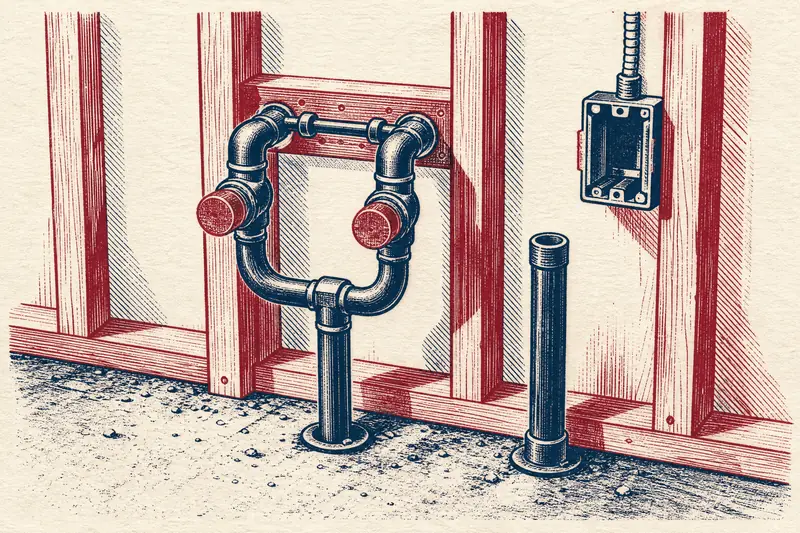
A plumbing rough-in covers three systems: drain and waste pipe, vent pipe, and hot and cold water supply. Drains run downhill to the building drain, vents tie into them so every trap keeps its water seal, and supply lines in PEX or copper end at capped stub-outs or valve bodies at each fixture. Shower and tub valves are usually set now so tile can go around them later.
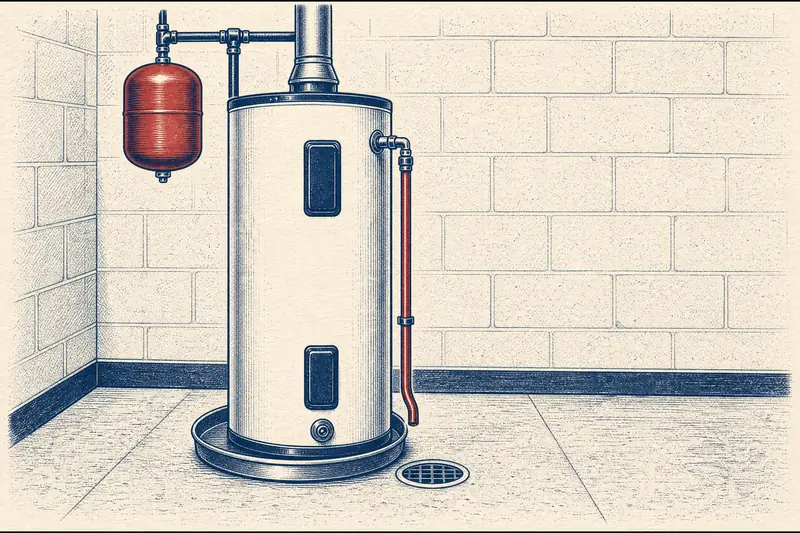
Two choices at this stage shape the rest of the house: where the water heater sits, and whether a capped loop is left for a future softener or whole-house filter. Both are easier to plan with the walls open.
Pages on what goes in the walls
Which decisions have to be made before rough-in?
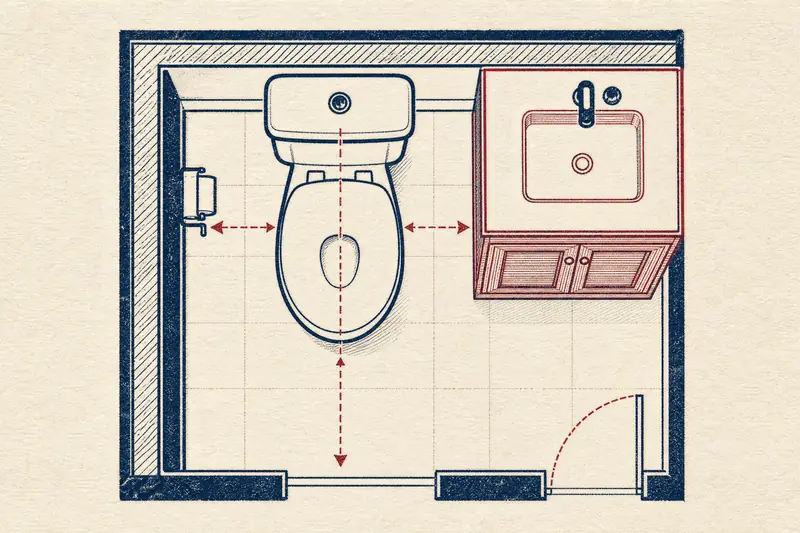
Fixture choices come first, because pipe locations are read off each fixture's spec sheet. One Kohler toilet's instructions ask for 12 inches or more from the finished wall to the drain center, and a shower valve, wall-hung sink or tub filler each brings its own dimensions. The layout also has to clear the codes' spacing rules, such as 15 inches from a toilet's center to a side wall under the 2021 IPC and IRC and the 2024 UPC.
Settle the pipe material, the water heater's location and fuel, and any softener loop before the plumber starts. Moving any of them after drywall means cutting walls open, and possibly a new inspection.
Pages on layout and measurements
How is rough-in plumbing inspected?
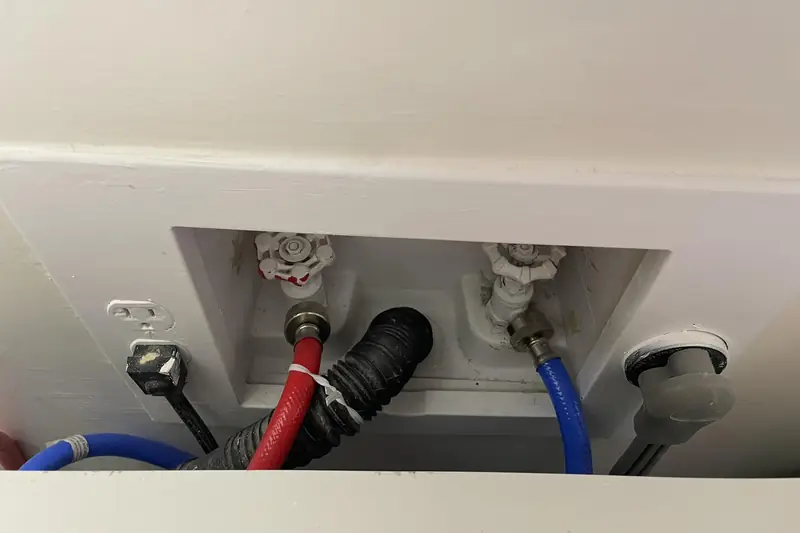
Rough-in plumbing is inspected with the pipe exposed and under test. Under the 2021 IPC, DWV pipe is filled to at least a 10-foot head of water and held 15 minutes, or air tested at 5 psi for 15 minutes if it is not plastic; the 2021 IRC adds a vacuum test that plastic may use. Water lines are held at working pressure or higher for at least 15 minutes. The inspector also looks at slope, supports, nail plates and cleanout access.
Some cities split the work into more visits: West University Place, Texas runs in-ground, top-out and final plumbing inspections under the 2021 IRC with local amendments. The plumbing permit page explains how to read your own card.
What does rough-in leave for later?
Rough-in leaves everything you will see in the finished room for later. Toilets, sinks, faucets, shower trim and angle stops are set at trim-out, after drywall, tile and paint, and the final inspection happens once fixtures are connected and the building is ready for occupancy. Before the walls close, top-out adds the last valves and protection plates and the system is checked again.
The one thing you cannot do later is see inside the wall. Before insulation, photograph every wall and floor run with a tape measure in the frame, and keep the pictures with the permit papers.
Rough-in numbers
- 10 fthead of water for a DWV water test, held 15 minutes2021 IPC 312.2
- 5 psiair test on DWV pipe that is not plastic, held 15 minutes2021 IPC 312.3
- 1/4 inper foot: the default slope for a horizontal drain in the 2024 UPC2024 UPC 708.1
- 1-1/4 infrom the stud edge: closer than this, the pipe gets a steel plate2021 IRC P2603.2.1
- 180 daysallowed between inspections before an IRC permit lapses2021 IRC R105.5
| Test | 2021 IPC | 2021 IRC | 2024 UPC |
|---|---|---|---|
| DWV water test | 10-foot head, 15 minutes | Filled 10 feet over the top fitting, 15 minutes | 10-foot head, 15 minutes before inspection |
| DWV air test | 5 psi, 15 minutes; no plastic | No plastic; plastic may take a -5 psi vacuum test | 5 psi, 15 minutes; no plastic |
| Water supply test | Working pressure, or 50 psi air on non-plastic, 15 minutes | Same; PEX air test only where the maker allows | Working pressure, or 50 psi air; PEX and PE-RT air only where the maker allows |
Pressman's note
Built from administration and test chapters in the 2021 IPC and IRC plus the 2024 UPC, two city inspection handouts (Rio Rancho and West University Place) and Kohler's K-3654 toilet instructions, each opened in October 2026. Local amendments to those model codes decide what applies on your job. Pipe sizing tables and vent design were left out on purpose: they belong to the plumber and the plans examiner.
Questions from the job site
Who schedules the rough-in plumbing inspection?
Whoever holds the permit, under the 2021 IPC, and the job may not continue beyond each stage until the inspector signs it off. If your plumber pulled the permit, ask for each date and result in writing.
What happens if drywall goes up before the rough-in passes?
The inspector can make you open it. The 2024 UPC says work covered before it is inspected and approved must be uncovered once notice is given. Expect cutting, patching and a second visit.
Is rough-in the same thing as top-out?
Not everywhere. Model codes name underground, rough-in and final inspections, and some cities add a top-out visit for piping above the floor up through the roof before anything is concealed. Your permit card shows the names your city uses.
How long can a job sit between rough-in and the next inspection?
A 2021 IRC permit lapses once 180 days go by with no inspection; written extensions are up to the building official. Ask before a long pause.
Does a small bathroom remodel need a rough-in inspection?
If new or moved piping goes in an open wall, expect one. The model codes' permit exemptions cover only small repairs such as fixing a leak or pulling and resetting a toilet with no parts replaced, and city lists vary. The bathroom remodel order page shows where it falls.
Can PEX water lines be air tested at rough-in?
Only where the code and the pipe maker allow it. The 2021 IRC accepts compressed-gas testing of PEX only where the maker's instructions specifically authorize it, and the 2024 UPC has a similar exception. Otherwise the test is done with water.